

Blog
Woven in Chinchero: A Living Tradition at the Centro de Textiles Tradicionales del Cusco
in Blog Posts
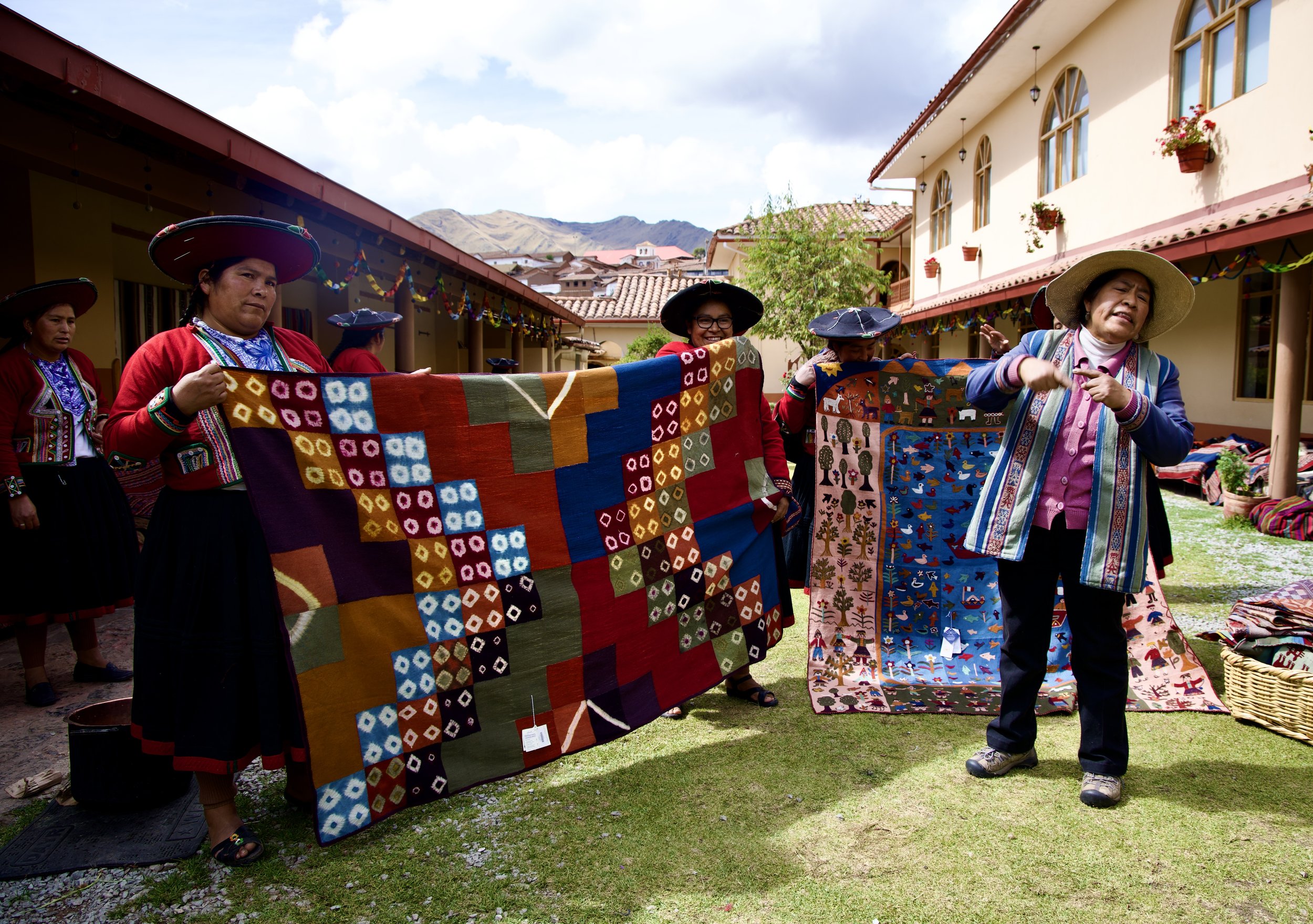
Chinchero sits at over 12,000 feet in the Peruvian highlands, a small Andean town of adobe walls, tiled rooftops, and open mountain air, a short drive from the city of Cusco on the road to the Sacred Valley. We arrived on a quiet afternoon, our van navigating the narrow streets before coming to a stop along a small side street. The entrance gave little away, but what was inside was worth finding.
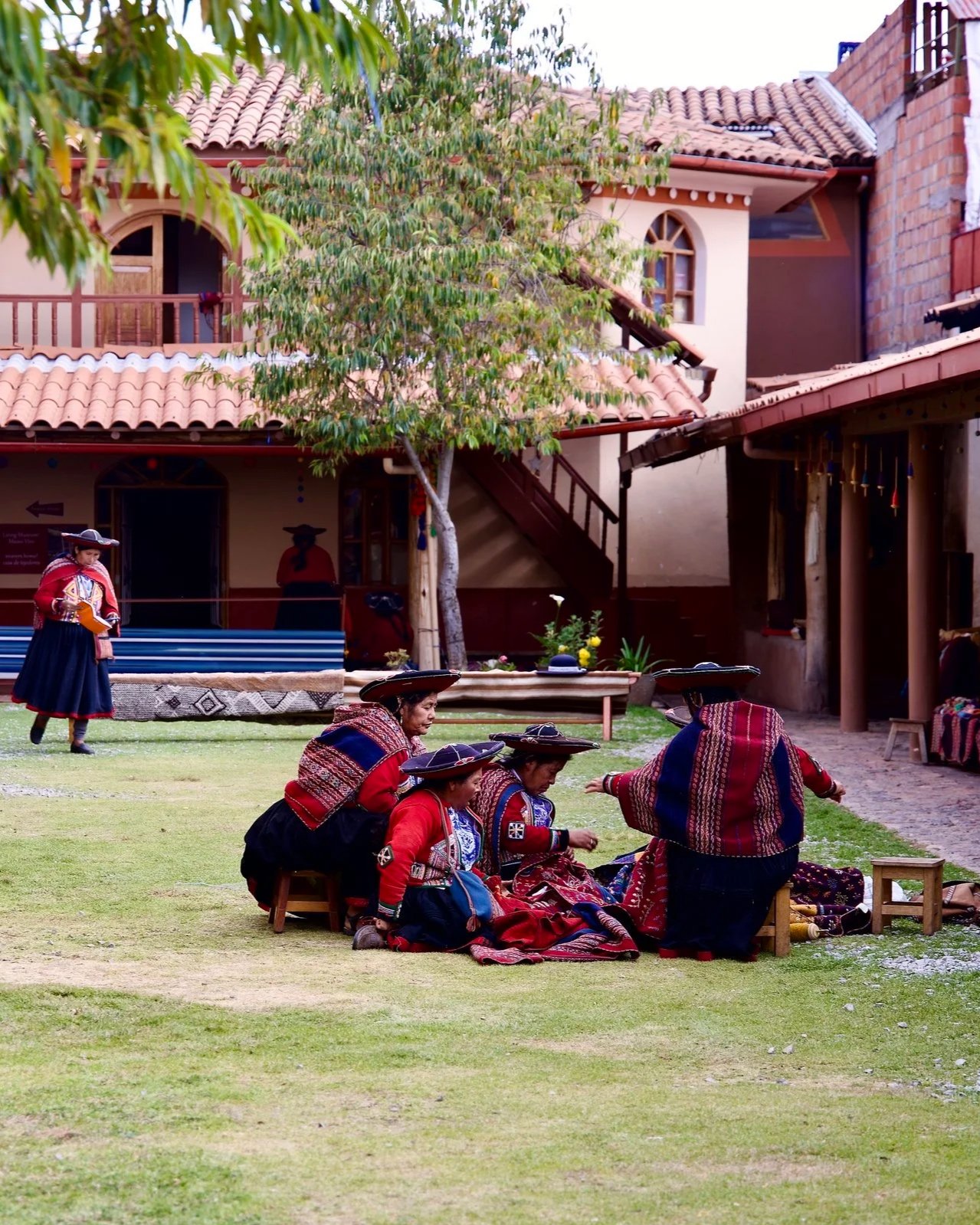
Our guide led us through an aged wooden doorway and into an open courtyard. Women were seated in small clusters, their hands moving with quiet precision, thread passing through fingers in a rhythm as practiced and unhurried as the landscape surrounding them. There was little conversation. Just the soft, steady sound of weaving being done with care.
This courtyard is home to the Centro de Textiles Tradicionales del Cusco, known as the CTTC, a nonprofit founded in 1996 by Nilda Callañaupa Alvarez, a master Quechua weaver born and raised in Chinchero. What began as a small group of indigenous women meeting informally in the 1970s to recover disappearing designs and techniques has since grown into an organization working with ten weaving communities across the Cusco region.
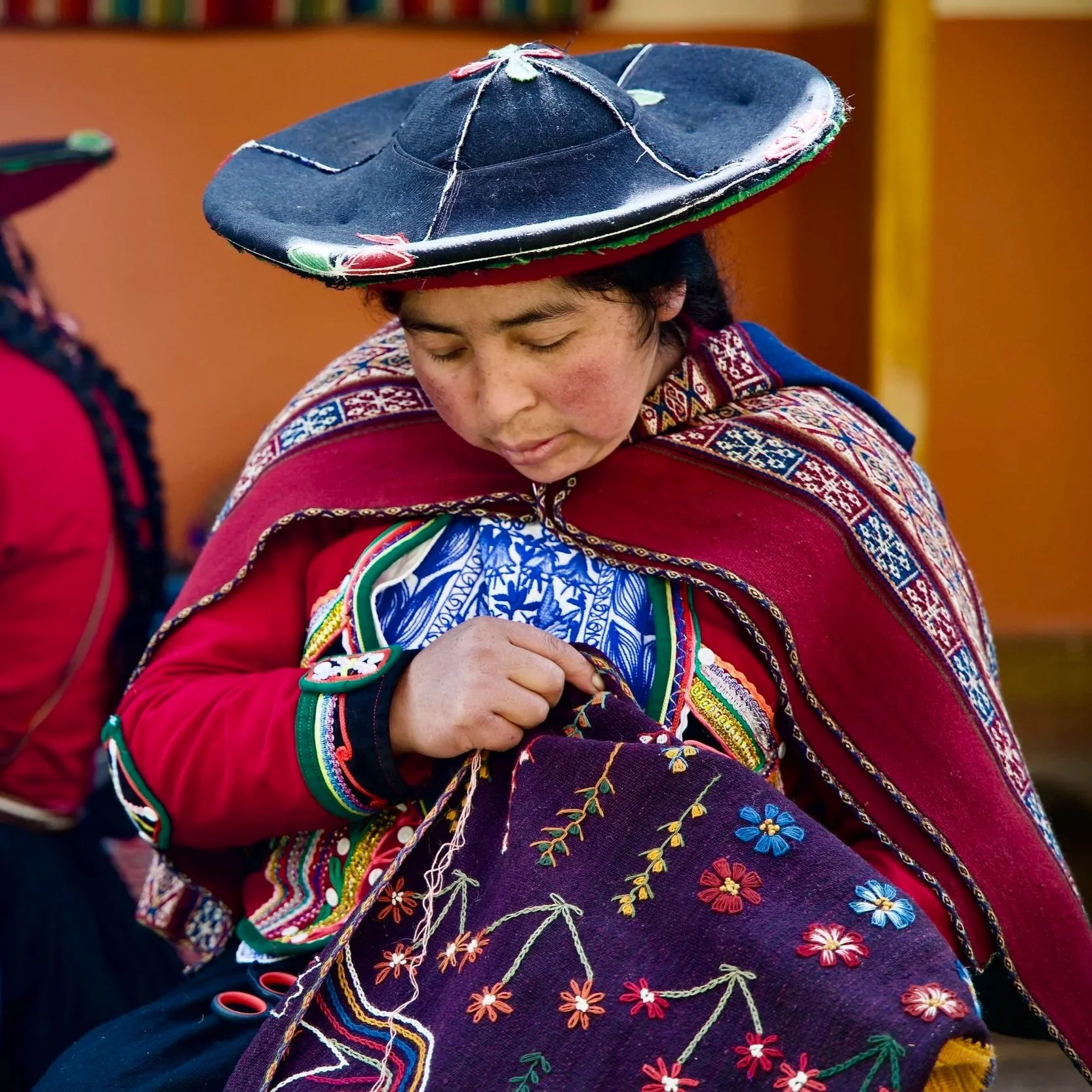
As we walked through, there was a sense of tradition in the space that is hard to describe. The closest comparison is stepping into a place of worship, regardless of belief, you instinctively lower your voice, slow your pace, and recognize that something meaningful is happening around you.
We were welcomed and seated, and the demonstration began, led by one of the master weavers. There was no script or performance in the way she spoke, just a clear, practiced way of explaining something she has lived her entire life. You could feel the pride and passion in her words, not just about the textiles, but about what they represent.
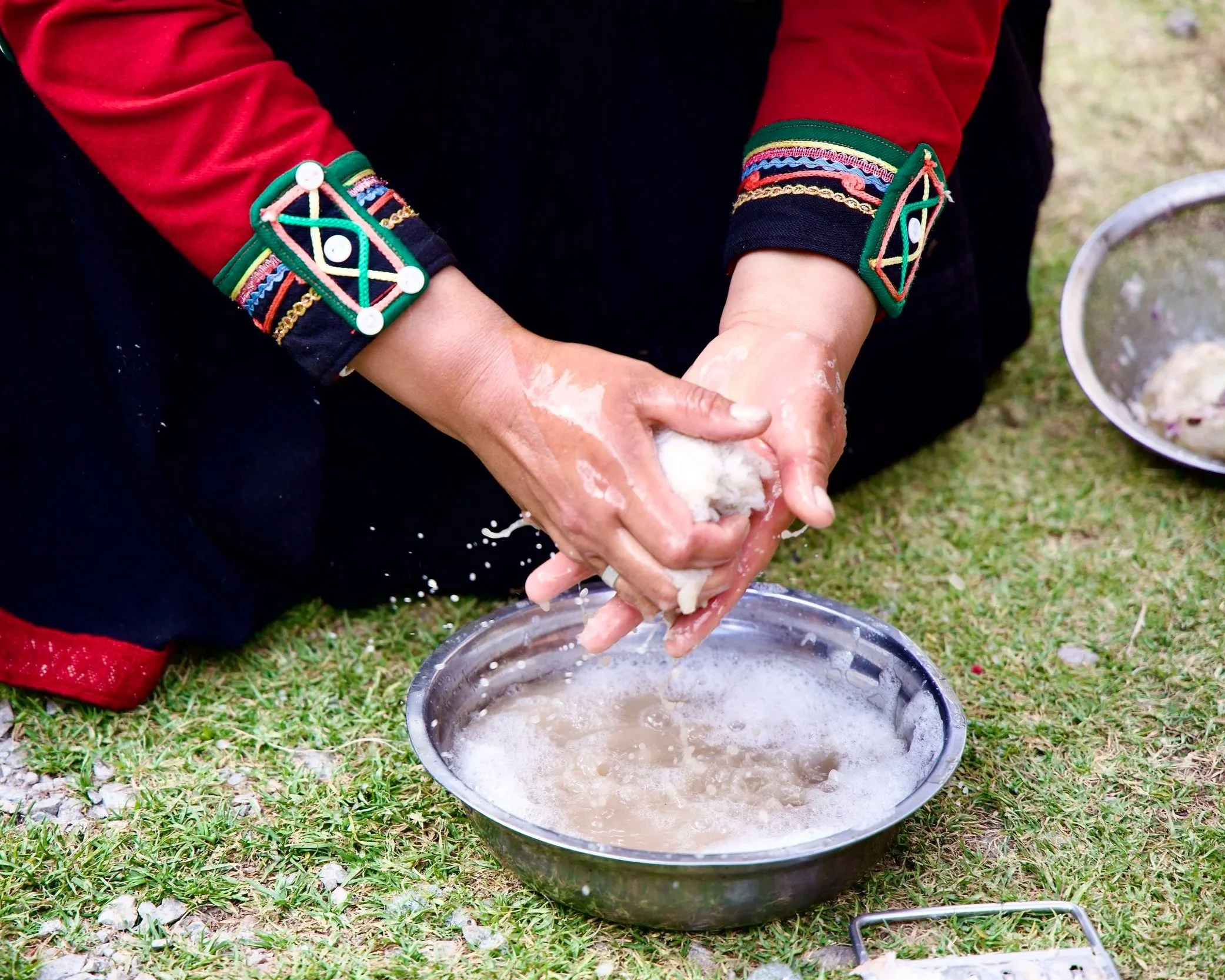
The demonstration walked us through each stage of the process, starting with the raw materials. Alpaca or sheep wool is cleaned, spun by hand, and dyed using entirely natural ingredients gathered from the surrounding landscape. Plants, roots, and minerals each play a role, and so do insects. Cochineal produces deep, rich reds, while local plants yield yellows, greens, and earthy tones. We watched the rinsing process, saw how color transforms the fiber, and began to understand just how many steps exist before a single pattern is even started.
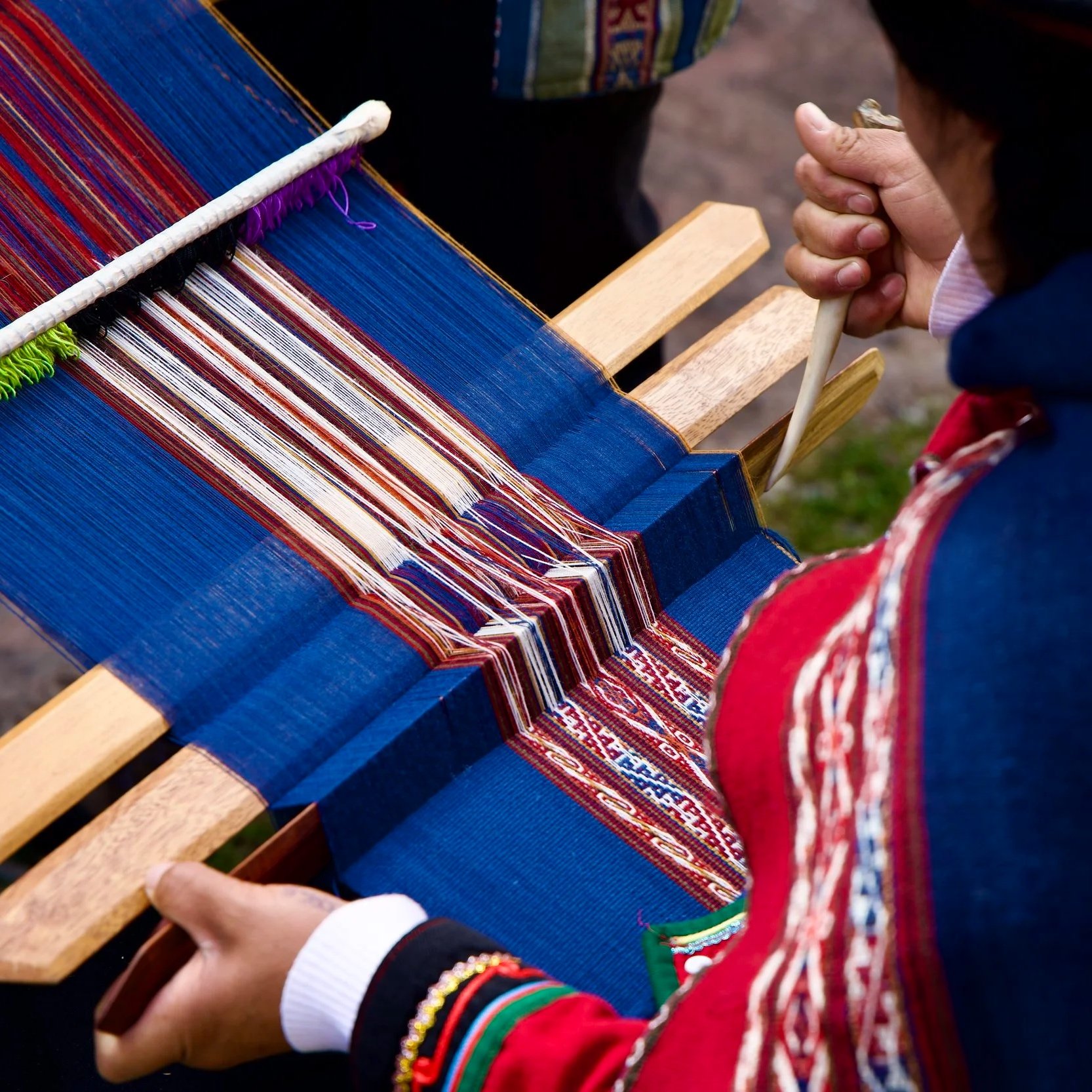
From there, the process moved into the weaving itself. Different styles were shown side by side, each tied to a specific community and tradition. The patterns are not just decorative choices, they have meaning, often representing elements of nature, community, and Andean cosmology.
Today the CTTC works against the loss of these traditions through community education, annual weaving competitions, and weekly gatherings where children learn from elders. The goal is not to freeze these traditions in place, but to ensure they remain alive, understood, and passed forward to the next generation.
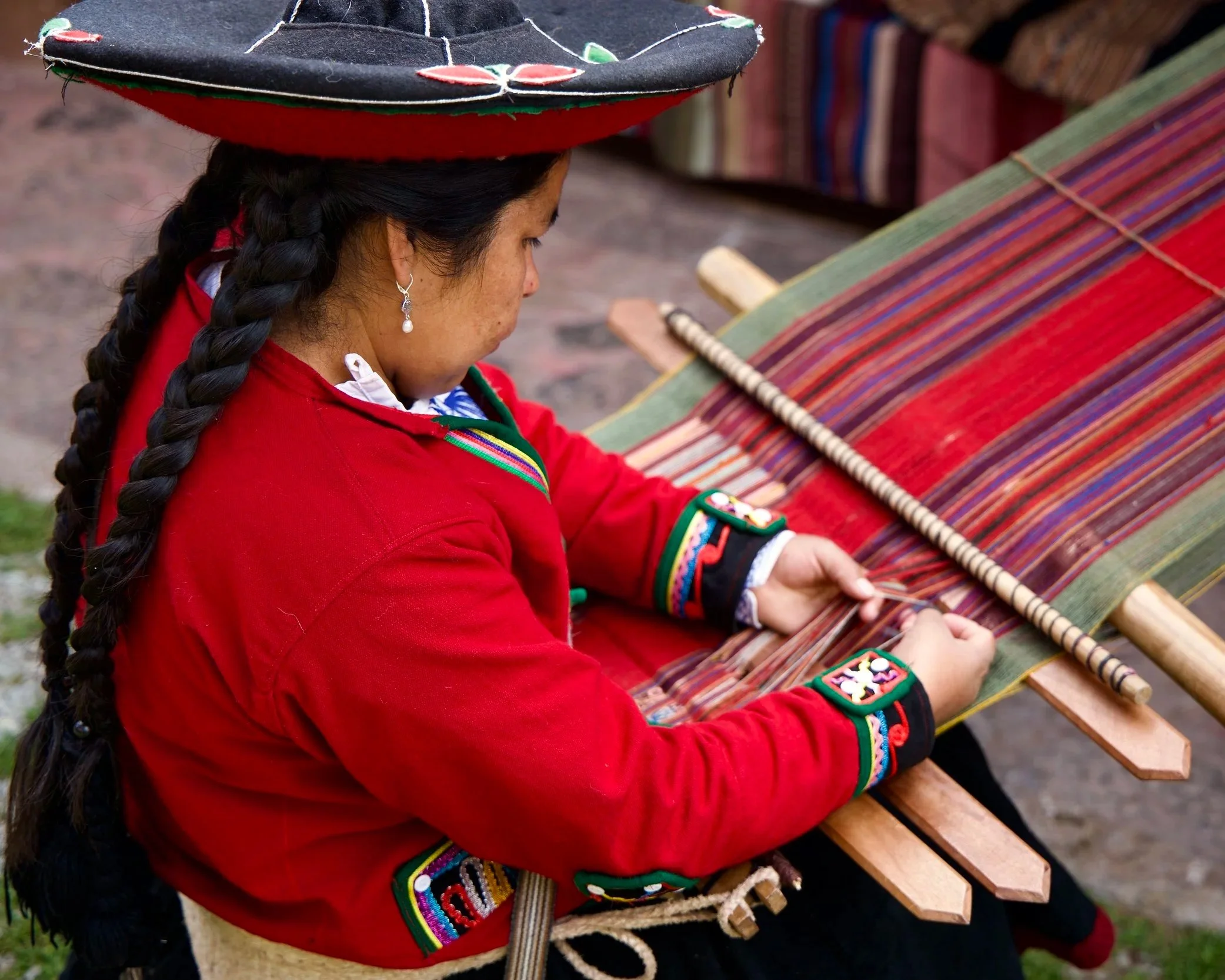
What stays with you after a visit like this is the combination of patience, intention, and continuity, the understanding that what you are watching took generations to preserve and could easily have been lost. Every piece made in this courtyard carries something of the people who made it, and that extends beyond the experience itself. A selection of textiles are available for purchase, and both the tour and any pieces you bring home directly support the program and the women who keep these traditions alive.
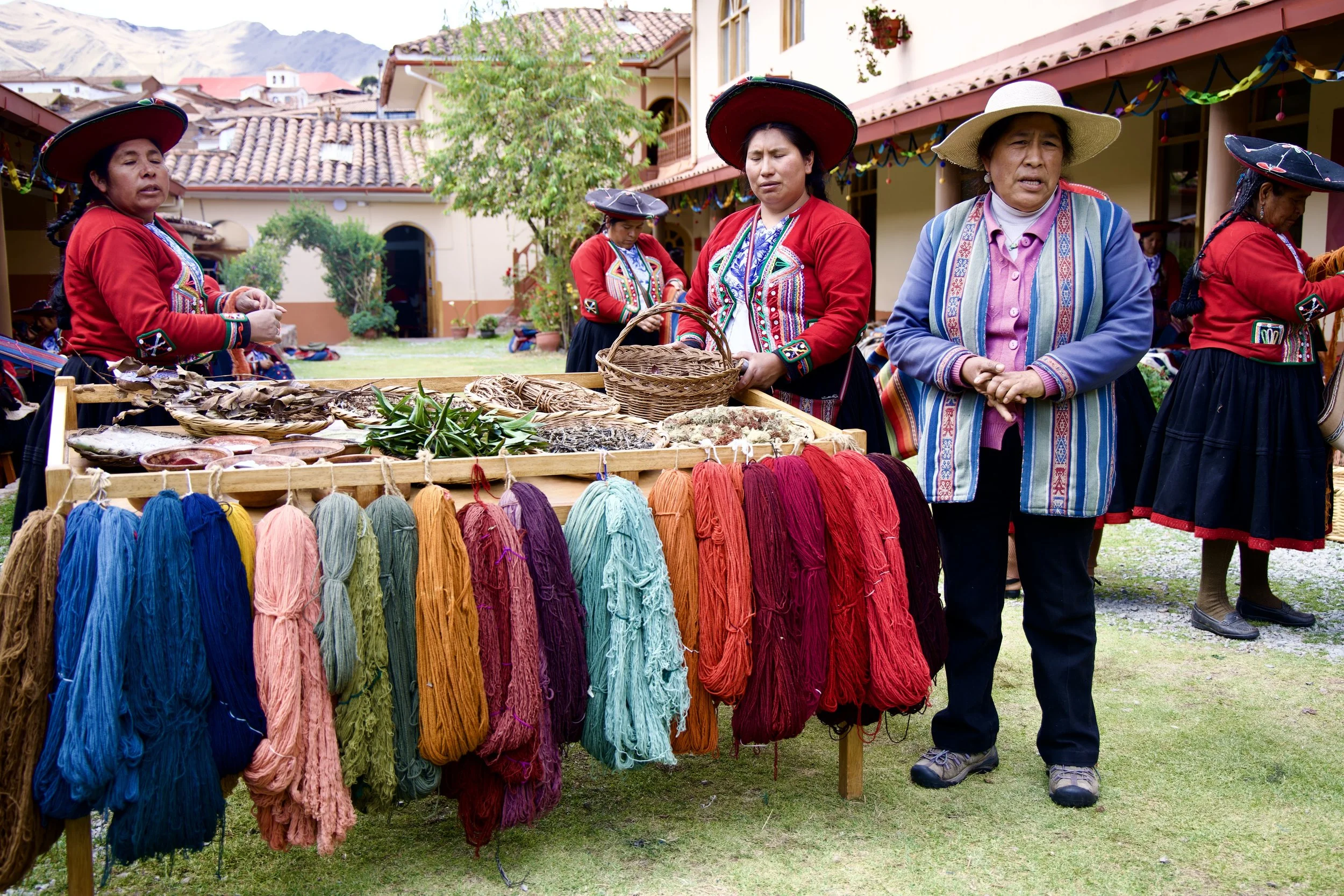
Chinchero is easy to pass through without fully entering. Visiting the CTTC is a reason to stay a little longer, and one of the more grounding moments a journey through Peru has to offer.
Written and photographed by Gabe Rios